
Empowering people with accurate information to make informed healthcare choices
Empowering people with accurate information to make informed healthcare choices
We provide Clinical Decision Support for

The Public
Accurate decision support empowers the public to better understand medical conditions they are concerned about and make informed medical decisions about seeking care.

Patients
Providing accurate information to patients is an evidence-based approach that increases patient engagement in their care and improves patient satisfaction.

Care Providers
Giving care providers accurate tools to understand a patient’s condition improves care and decreases healthcare costs.
Partners
We are proud to work with a wide variety of public, private, and academic partners to improve the lives of the populations we serve.


Partners
We are proud to work with a wide variety of public, private, and academic partners to improve the lives of the populations we serve.

Applications
We have several mobile CDS applications under development, with more coming soon! Reach out to partner with us on one.
Contact
We would love to talk with users of our products and potential partners about how to help people make more informed healthcare choices.
Get to know our work
Why we are here
FTHR Group was founded in 2024 as a logical extension of the work we had been doing to lead CDC’s COVID-19 Self Checker forward triage tool and the agency’s telehealth unit during the pandemic. The Self Checker had more than 21 million conversations with users during its two years of operation. Its companion program, CDC’s vSafe post-vaccine checker, has had more than 200 million interactions, all with around four staff. These programs remain some of the most highly visited websites in the CDC’s history and some of the most widely used forward triage/symptom monitoring applications in the U.S. during the pandemic. These applications and similar work signaled a new era of patient- and public-facing clinical decision support (CDS) applications that can now build upon a substantial evidence base of using clinician-focused CDS in healthcare systems.
Where we work
Enhanced public awareness of CDS applications and success in deploying them will continue to catalyze the use of public- and patient-facing CDS applications. These will help users identify (and potentially address) medical issues before or while they seek further care, direct them to the most appropriate care, and reduce unnecessary costs in the fractured and high-friction U.S. healthcare system. In addition, advances in technology will allow first-entry healthcare providers (e.g., emergency service personnel and nursing staff) to use CDS to better assess patients and implement evidence-based approaches earlier in the healthcare process. These interventions will further improve health outcomes, quality of patient care, and overall patient satisfaction. The low use of physician and mid-level provider CDS, as well as variable accuracy of symptom checkers that attempt to diagnose a broad range of conditions, provides opportunities for FTHR Group to develop accurate, condition-specific applications with evidence-based interventions or guidance for the public, patients, healthcare systems, and healthcare payers.
Measuring success
FTHR Group will build on its experience to develop, implement, evaluate, and manage public-, patient-, and first-entry healthcare provider-driven CDS. Our success will be measured by users of institutionally-associated or individual CDS applications that provide accurate information to empower them to make informed healthcare decisions. These tools will increase user satisfaction and reduce costs associated with unnecessary care, improving the health of these populations and saving the precious time of both patients and providers.
FAQs
Didn't find the answer you were looking for?
We are happy to walk you through our protocols and technology personally.
Get to know our staff
Tony Neri

MD, MPH, FACPM, Lean / Six Sigma Blackbelt, Captain USPHS (Ret.)
Founder and Chief Executive Officer

Tony Neri
MD, MPH, FACPM, Lean / Six Sigma Blackbelt, Captain USPHS (Ret.)
Founder and Chief Executive Officer
Tony has more than 30 years of experience in medicine and population health. A bachelors degree in microbiology with work in recombinant gene therapeutics led to medical school in Chicago. He then led several high-impact domestic and international public health programs during a 20-year career at the U.S. Centers for Disease Control and Prevention (CDC). His career highlights at CDC included being the Director of CDC’s Preventive Medicine Residency and Fellowship, helping to lead CDC’s telehealth and COVID-19 Self Checker programs, and serving as the Chief Data Scientist and Acting Division Director at CDC’s Division of Environmental Health Science and Practice. He maintains board certifications in Public Health and General Preventive Medicine as well as Clinical Informatics.Tony contributes to national efforts as a board member of the ACGME Preventive Medicine Review Committee and as a member of many AMIA workgroups. Since the early 1990’s he has maintained his medical skills by working in both professional and volunteer emergency service organizations. He has been the physician for the Georgia Department of Natural Resources’ prescribed fire program since 2012. He continues his service as an Eagle Scout by helping to lead the local Cub Scout troop.
Vlad Schorstein
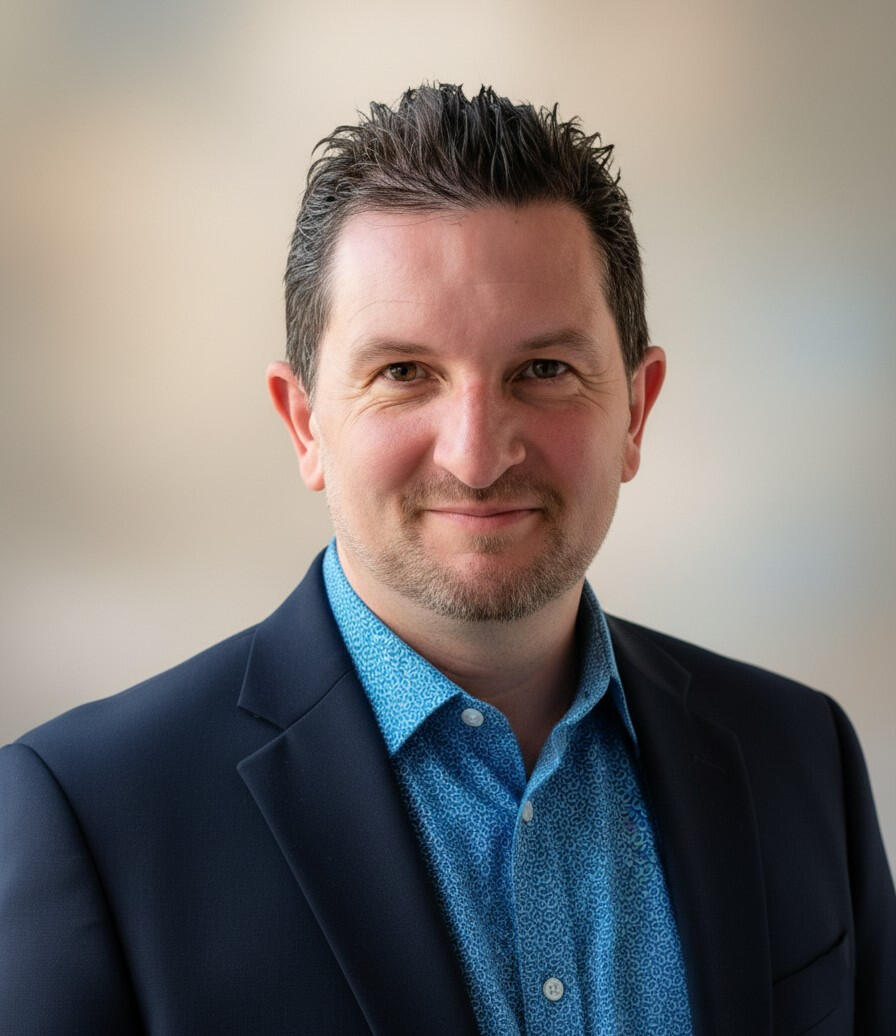
MD, MPH
Director of User Engagement
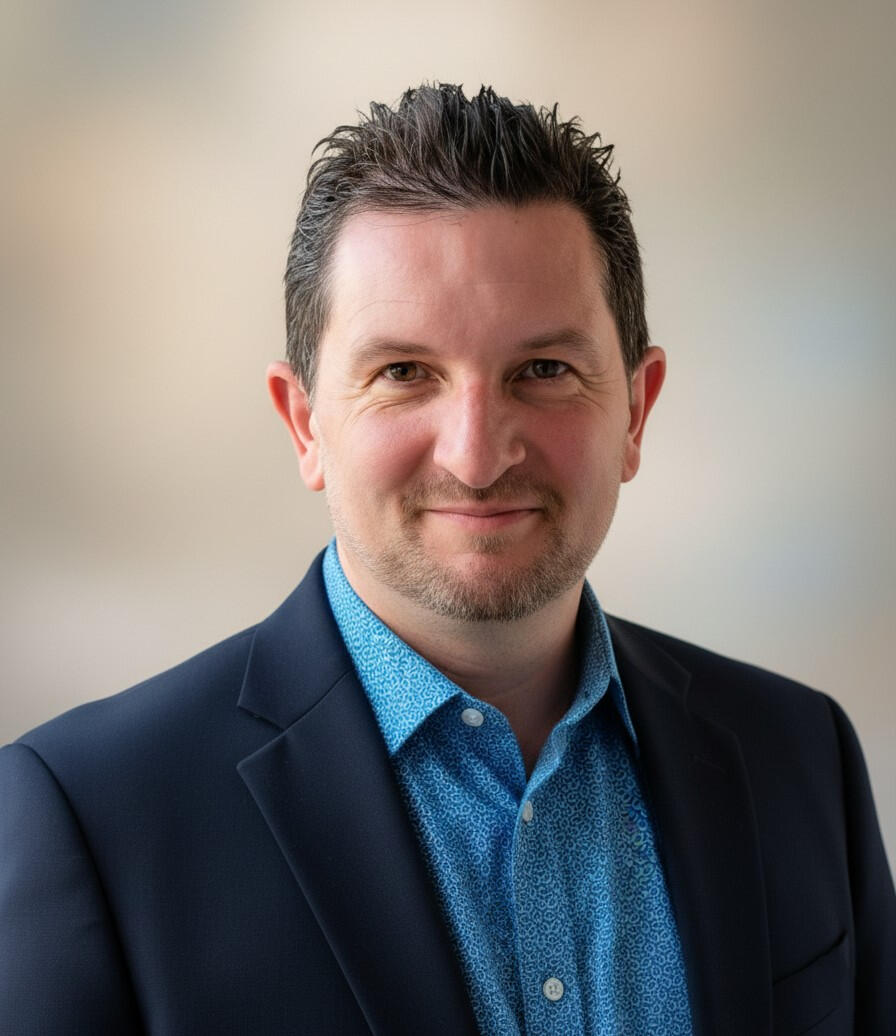
Vlad Schorstein
MD, MPH
Director of User Engagement
Vlad’s journey to the field of public health began with a bachelor’s degree in biology from Oglethorpe University. That interest in bioscience led to earning an M.D. from Spartan Health Sciences University School of Medicine and ultimately a Master of Public Health from Mercer University.He then became involved in addressing Georgia’s opioid crisis, first as a graduate intern with the Georgia Department of Public Health’s Opioid and Prescription Drug Misuse and Overdose Project, and then as the Prescription Drug Monitoring Program Integration Coordinator for the state. This role allowed him to develop and strengthen partnerships with healthcare payers, providers, and patient groups across the state to facilitate clinical workflows and improve patient outcomes.He eventually transitioned to the Centers for Disease Control and Prevention (CDC) and managed a portfolio of states participating in the Overdose Data to Action in States program.His career goals center around finding innovative solutions to address a nationwide physician shortage, disparities in healthcare delivery, and gaps between clinical medicine and population health.
Ready to reach out?
Join us to explore how our products and partnerships can lead to more informed healthcare choices for individuals.
Let's get in touch!
We would love to talk with users of our products and potential partners about how to help people make more informed healthcare choices.
Privacy policy
At Forward Triage Healthcare Resources Group (FTHR Group), we take your privacy seriously. This Privacy Policy explains how we collect, use, and disclose your personal data when you access or use our Services.By using our Services in any manner, you acknowledge and accept the practices described below. Your use of our Services is also subject to our Terms of Use, which incorporates this Privacy Policy.We may update this Policy from time to time and will notify you of material changes via our website, email, or other means. Continued use of the Services after any changes constitutes your agreement to the updated Policy.
What We Collect
Profile & Contact Data
Name, email, phone number, unique identifiers.
Used for: Services, marketing, and correspondence.
Shared with: Service Providers, Advertising Partners, Business Partners, Authorized Parties.---Identifiers
Year of birth, zip code, race/ethnicity, gender, medical conditions.
Used for: Providing and improving the Services.
Shared with: Service Providers.---Payment Data
Name, financial account info, card type, last 4 digits, billing address.
Used for: Processing transactions.
Shared with: Payment processing Service Providers only.---Commercial Data
Purchase history on FTHR Group platforms.
Used for: Services, marketing, and correspondence.
Shared with: Service Providers.---Device & IP Data
IP address, device ID, browser type, operating system.
Used for: Providing and improving the Services.
Shared with: Service Providers, Analytics Partners.---API Usage Data
API calls and user interface interactions.
Used for: Services, marketing, and correspondence.
Shared with: Service Providers, Advertising Partners, Business Partners, Authorized Parties.---Web Analytics
Page interactions, referral sources, session statistics.
Used for: Services, marketing, and correspondence.
Shared with: Service Providers, Advertising Partners, Business Partners, Authorized Parties.---Social Network Data
Email, username, IP address, device ID from linked social accounts.
Used for: Services, marketing, and correspondence.
Shared with: Service Providers, Advertising Partners, Analytics Partners, Business Partners, Authorized Parties.---Professional & Employment Data
Job title, research objectives, employer affiliation.
Used for: Services, marketing, and correspondence.
Shared with: Service Providers, Advertising Partners, Business Partners, Authorized Parties.---Geolocation Data
IP-address-based location information.
Used for: Services, marketing, and correspondence.
Shared with: Service Providers, Advertising Partners, Business Partners, Authorized Parties.---Special Categories of Data
Government-issued ID numbers (SSN, driver's license, passport, state ID).
Used for: Services, correspondence, and marketing.
Shared with: Service Providers, Business Partners, Authorized Parties.---Other Identifying Information
Emails, letters, texts, or communications you send us.
Used for: Services, marketing, and correspondence.
Shared with: Service Providers, Advertising Partners, Business Partners, Authorized Parties.
Why We Collect Your Data
Providing, Customizing & Improving Services
- Creating and managing your account
- Processing orders, transactions, and billing
- Providing requested products, services, or information
- Improving the Services through testing, research, and analytics
- Personalizing your experience
- Verifying your identity (KYC)
- Fraud protection, security, and debuggingMarketing
- Marketing and selling our ServicesCorrespondence
- Responding to your inquiries and requests
- Sending communications based on your preferencesLegal & Compliance
- Meeting legal obligations and court orders
- Preventing and investigating illegal activity
- Protecting the rights, property, or safety of users or FTHR Group
- Enforcing our agreements and resolving disputesWe will not use your data for materially different purposes without providing notice or obtaining your consent.
How We Share Your Data
Service Providers
Technology, hosting, analytics, security, customer support, fulfillment, and payment processors. Our payment partner collects card data directly — please review their privacy policy for details.Advertising Partners
Ad networks, data brokers, and marketing providers who help us reach you with relevant offers.Analytics Partners
Companies that track how users find and interact with our Services.Business Partners
Businesses we collaborate with to offer joint services or promotions.Parties You Authorize
Third-party services, social media platforms, or other users you connect with through our Services.Legal Authorities
Government agencies or law enforcement when required by law or legal process.Business Transfers
In the event of a merger, acquisition, or bankruptcy, your data may be transferred to a successor entity.Anonymized Data
We may create de-identified or aggregated data for lawful business and research purposes. This data will not identify you personally.
Cookies & Tracking
We use cookies and similar technologies (pixel tags, web beacons, JavaScript) to recognize your browser, understand usage patterns, and improve our Services.Types of Cookies We UseEssential Cookies — Required to provide features you've requested, such as secure login. Disabling these may limit access to certain Services.Performance & Analytical Cookies — Help us understand how visitors use our Services, including page views and session length. Google Analytics is one tool we use. You may opt out at google.com/privacy_ads.html or via the Google Analytics Opt-out Add-on.Session Replay Technology
We may use session replay tools to identify issues and improve the user experience. By continuing to use our Services, you consent to this use. You may adjust settings through your browser's cookie management tools.Managing Your Cookies
You can control or delete cookies through your browser settings. Note that disabling cookies may impact Service functionality. Learn more at allaboutcookies.org or ico.org.uk.Our Services do not currently support "Do Not Track" browser requests.
Data Security & Retention
Security
We use physical, technical, organizational, and administrative safeguards to protect your data. You can help protect your account by using a strong password, limiting device access, and signing out when finished. No data transmission or storage method is completely secure.Retention
We retain your data as long as necessary to provide Services or meet legal obligations:- Profile & credentials — For as long as you have an account
- Payment data — For as long as needed to process your transaction
- Device/IP data — For as long as needed to maintain system performance
- API usage data — Per our responsible development frameworkData may also be retained in anonymized or aggregated form after your relationship with us ends.Children's Privacy
We do not knowingly collect data from individuals under 18. If you believe a minor has provided us with data, contact us immediately at [email protected] and we will delete it promptly.
Your Privacy Rights
California Residents
Under California Civil Code §§ 1798.83–1798.84, you may request that we not share your data with third parties for their direct marketing purposes. Contact us at [email protected] to submit a request.Nevada Residents
We do not sell personal data as defined under Nevada Revised Statutes Chapter 603A.EU, UK & EEA Residents (GDPR)
If you reside in the EU, UK, Liechtenstein, Norway, or Iceland, you have the following rights:- Access — Request a copy of the data we hold about you
- Rectification — Request corrections to inaccurate or incomplete data
- Erasure — Request deletion of some or all of your data
- Withdrawal of Consent — Withdraw consent where processing is consent-based
- Portability — Receive your data in a machine-readable format
- Objection — Object to use of your data for direct marketing or other purposes
- Restriction — Ask us to limit how we process your data
- File a Complaint — Lodge a complaint with your national supervisory authority (edpb.europa.eu)To exercise any of these rights, contact us at [email protected]. We may need to verify your identity before processing your request.Data Transfers
Our Services are hosted in the United States. By using our Services, you authorize the transfer and processing of your data in the U.S., which may have different data protection laws than your country of residence.
Contact
Questions About This Policy?Email: [email protected]
Website: www.fthrgroup.comFTHR Group, LLC
Financial Conflict of Interest (FCOI) Policy
Effective: May 12, 2026This policy ensures that research funded by the National Institutes of Health (NIH) is designed, conducted, and reported objectively — free from bias caused by Investigator financial conflicts of interest.It implements regulatory requirements under 42 CFR Part 50 Subpart F ("Promoting Objectivity in Research") and 45 CFR Part 94. These regulations apply to PHS/NIH grants and cooperative agreements and do not apply to SBIR or STTR Phase I applications.FTHR Group adopts this policy for all Investigators engaged in PHS/NIH-funded research to protect research integrity, safeguard human and animal subjects, and maintain public trust.
Applicability
This policy applies to any individual who meets the regulatory definition of "Investigator" — meaning any person responsible for the design, conduct, or reporting of PHS/NIH-funded research, regardless of title. This includes the Principal Investigator (PI), Project Director (PD), collaborators, and consultants.FTHR Group determines Investigator status based on the individual's role and degree of independence in research activities, not their title or credentials.
Key Definitions
Financial Conflict of Interest (FCOI)
A Significant Financial Interest (SFI) related to PHS/NIH-funded research that could directly and significantly affect the design, conduct, or reporting of that research.Significant Financial Interest (SFI)
Financial interests of an Investigator — and their spouse, domestic partner, or dependent children — that reasonably appear related to their institutional responsibilities and exceed the following thresholds:- Publicly traded entity: Total remuneration + equity value exceeds $5,000 in the prior 12 months
- Non-publicly traded entity: Remuneration exceeds $5,000, or any equity interest exists
- Intellectual property: Income from patents, trademarks, or copyrights exceeds $5,000 in the prior 12 months
- Reimbursed/sponsored travel: Exceeds $5,000 related to institutional responsibilitiesWhat is NOT an SFI (no disclosure required)
- Salary or royalties paid by FTHR Group to current employees
- Ownership interest in FTHR Group (a for-profit entity)
- Income from mutual funds or retirement accounts not under Investigator's direct control
- Income from seminars or advisory panels sponsored by U.S. federal, state, or local government agencies, U.S. institutions of higher education, academic teaching hospitals, medical centers, or affiliated research institutesForeign Financial Interests
All financial interests from outside the U.S. must be disclosed when they exceed $5,000, including income from foreign governments, institutions, and advisory panels.Designated Official (DO)
The FTHR Group Chief Executive Officer or designee, responsible for reviewing SFI disclosures and managing identified FCOIs.Manage
Taking action to reduce or eliminate an FCOI to ensure research is free from bias.
Disclosure Requirements
All Investigators must disclose SFIs related to their institutional responsibilities — not limited to funded research activities.When to DiscloseAt Time of Application
All Investigators must submit disclosures to the Designated Official (DO) before participating in PHS/NIH-funded research. New Investigators joining after submission must disclose promptly before engaging in the project.Annual Disclosure
Each Investigator must submit an updated disclosure on or before January 1 of each year during the award period, including any new or updated SFI information.Ad Hoc Disclosure
Within 30 days of discovering or acquiring a new SFI (through purchase, marriage, inheritance, etc.) or after each occurrence of reimbursed/sponsored travel exceeding $5,000.All disclosure forms are retained by FTHR Group as part of record-keeping requirements.
Review, Determination & Management
Review ProcessThe DO reviews all SFI disclosures in relation to each PHS/NIH research award. If the DO has a personal SFI related to the research under review, they will recuse themselves and an alternate reviewer will be appointed.Prior to New Award: The DO reviews disclosures before any funds are spent. If an FCOI is identified, a report is submitted to NIH before expenditure begins.Annual Review: Updated disclosures are reviewed to determine if management plan changes are needed.Ad Hoc Review: New disclosures during an award are reviewed within 60 days. An interim management plan is implemented if an FCOI is found.---Management of FCOIsWhen an FCOI is identified, the DO will implement a management strategy, which may include:- Public disclosure of the FCOI in publications, presentations, or to study personnel
- Disclosure to research participants in informed consent documents (clinical research)
- Appointment of an independent monitor
- Modification of the research plan
- Change of personnel roles or removal from portions of the research
- Reduction or elimination of the financial interest
- Severance of the relationship creating the conflictThe Investigator must agree in writing to the management plan before any NIH award funds are spent. The DO will communicate all determinations and plans in writing to the Investigator and their supervisor.
Reporting to NIH
FTHR Group submits all FCOI reports to NIH via the eRA Commons FCOI Module.Initial (Original) FCOI Report
Required before any funds are spent on a new award, or within 60 days of identifying a new FCOI during an active award.Annual FCOI Report
Required annually for the duration of every award (including no-cost extensions), submitted at the same time as the Research Performance Progress Report (RPPR). Not required at closeout.Revision or Mitigation Report
Submitted after a retrospective review if new information is discovered or if bias is found.
| Report Type | When Required |
|---|---|
| Initial FCOI Report | Before fund expenditure or within 60 days of new FCOI |
| Annual FCOI Report | With annual progress report or at extension |
| Revised FCOI Report | After retrospective review, if changes needed |
| Mitigation Report | When bias is confirmed in retrospective review |
NIH FCOI Module guide: era.nih.gov/files/fcoiuserguide.pdf
Public Accessibility
This FCOI policy is publicly available on FTHR Group's website as required by the NIH Grants Policy Statement.FTHR Group will respond in writing within five business days to any request for information about FCOIs held by Senior/Key Personnel, when all three of the following apply:1. The SFI was disclosed and is still held by Senior/Key Personnel
2. FTHR Group determined the SFI is related to the PHS/NIH-funded research
3. FTHR Group determined the SFI constitutes an FCOIInformation Made Available Upon Request
- Investigator's name
- Investigator's title and role in the project
- Name of the entity in which the SFI is held
- Nature of the SFI
- Approximate dollar value (in regulatory increments)This information is updated at least annually and within 60 days of identifying a new FCOI. Records remain accessible for at least three years from the most recent update.
Training Requirements
All Investigators must complete FCOI training:- Before engaging in any PHS/NIH-funded research
- At least once every four years
- Within 30 days if found non-compliant with this policy or a management plan
- Promptly when FTHR Group revises this policy in a way that affects Investigator requirements
- Before participating if new to FTHR Group researchRequired Training Modules
1. NIH FCOI Training Module: grants.nih.gov/policy-and-compliance/policy-topics/fcoi/fcoi-training
2. NIH Virtual Seminar on FCOI Compliance: youtube.com/watch?v=D292YZ6BX24After completing each module, Investigators must email the DO with the date of completion for audit purposes.
Noncompliance & Corrective Actions
If FTHR Group identifies an SFI that was not disclosed, reviewed, or managed in a timely manner, the DO will within 60 days:- Review the SFI
- Determine whether it is related to NIH-funded research
- Determine whether it constitutes an FCOI
- Implement an interim management plan if applicable
- Submit an FCOI report to NIH if requiredRetrospective Review
In cases of noncompliance — including failure to disclose, failure to manage, or failure to follow a management plan — FTHR Group will conduct a retrospective review within 120 days to assess whether research was biased.If bias is confirmed, FTHR Group will:
- Notify NIH promptly
- Submit a Mitigation Report documenting findings and corrective actionsEnforcement
Compliance is a condition of employment and/or participation. Violations may result in:- Formal notice or disciplinary action
- Restrictions on research activities or use of funds
- Suspension or termination of employment or contract
- Disqualification from government-funded research
Subrecipients & Clinical Research
Subrecipient Requirements
All subrecipients (collaborators, consultants, subcontractors, sub-awardees) carrying out substantive portions of PHS/NIH-funded research are subject to FTHR Group's terms and conditions. Each written agreement specifies whether the subrecipient's own FCOI policy or FTHR Group's policy applies.- If the subrecipient's policy applies, they must certify compliance and report FCOIs to FTHR Group within 50–55 days of identification.
- If the subrecipient cannot certify compliance, FTHR Group's policy governs and Investigators must disclose SFIs directly to FTHR Group.Clinical Research
If HHS determines that a PHS-funded clinical research project was designed, conducted, or reported with an unmanaged or unreported FCOI, the Investigator will be required to disclose the conflict in all public presentations and request addenda to any previously published work.
Record Keeping & Resources
Records
FTHR Group retains all SFI disclosures, review records, management plans, and related documentation for a minimum of three years from the date of the final expenditures report, or longer as required by 2 CFR 200.334.---Useful NIH Resources- NIH FCOI Regulation: ecfr.gov
- NIH FCOI Overview: grants.nih.gov/policy-and-compliance/policy-topics/fcoi
- NIH FCOI Training: grants.nih.gov/policy-and-compliance/policy-topics/fcoi/fcoi-training
- NIH Welcome Wagon for New Recipients: grants.nih.gov/policy-and-compliance/welcome-wagon
- NIH FCOI Email: [email protected]
Contact
FCOI Policy Questions or DisclosuresAntonio Neri, MD, MPH, FACPM, Capt. USPHS (Ret.)
Chief Executive Officer, FTHR Group, LLCEmail: [email protected]